
The Prometheus and Faust Metaphors
American PrometheusThis thread traces how the book uses classical and religious metaphors to frame Oppenheimer’s gift of atomic fire and his punishment for questioning its use.
increasing Bearing strength in each event
 decreasing
Bearing strength in each eventdecreasingFire Brought to Humanity
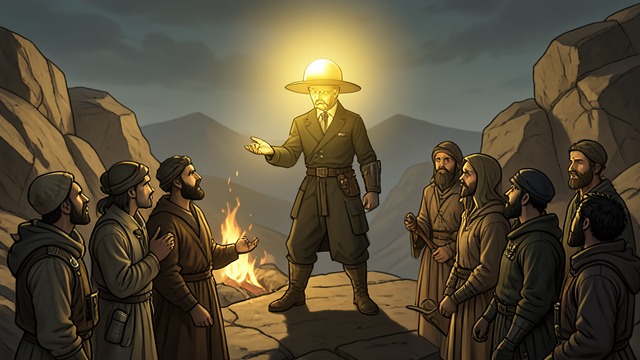
Fire Brought to Humanity
The Promethean image
The press and later commentators compared modern scientists to Prometheus, bringing the fire of the gods to humanity. Oppenheimer became the most visible figure in that analogy.
Gift and danger
Atomic fire promised power but also threatened destruction. The metaphor captured a central contradiction in Oppenheimer’s life and in the nuclear age.
A Bargain with the Weapon

A Bargain with the Weapon
Choosing participation
Oppenheimer accepted the work as a wartime duty, believing the weapon might prevent a Nazi victory. He used his intellect and authority to bring the project to completion.
A Faustian cost
The success brought recognition and influence but bound him to a weapon whose consequences exceeded its original purpose. The bargain could not simply be renegotiated after Trinity.
Trying to Control the Fire

Trying to Control the Fire
A turn toward restraint
After the bombings, Oppenheimer sought international control and greater candor. He tried to contain the arms race without denying his own role in beginning it.
Resistance from power
American and Soviet leaders rejected the sacrifices needed for control. Like Prometheus, he had helped bring fire to humanity and then found himself powerless to govern it.
Punishment for Warning

Punishment for Warning
Policy becomes suspicion
Oppenheimer’s attempts to resist a more destructive weapon angered powerful officials. His old associations supplied material for a security case.
The myth becomes personal
The hearing made the Promethean metaphor seem newly apt: a figure who had helped give society atomic power was punished when he tried to warn against it.
A Legacy Beyond Punishment

A Legacy Beyond Punishment
Recognition returns
The Fermi Award and later public tributes restored part of Oppenheimer’s reputation. They did not undo the hearing or the choices that led to it.
An unresolved figure
The book leaves him neither a pure hero nor a simple sinner. His legacy remains the human difficulty of creating power that outruns political and moral control.
1945, as Oppenheimer becomes a public symbol
1942–1945, from the project’s creation to Trinity
1945–1949, during the first postwar policy debates
1953–1954, from the H-bomb dispute to the hearing
1963–1967, as Oppenheimer is publicly rehabilitated
